

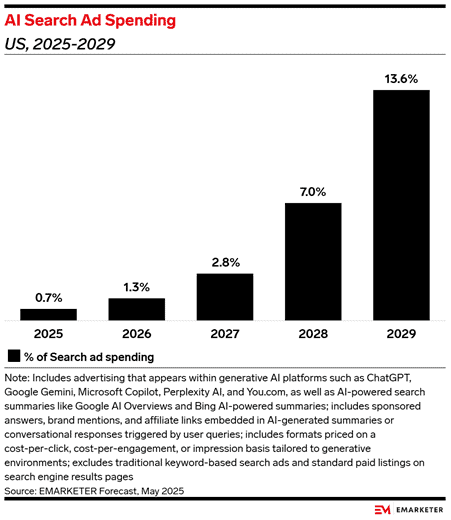
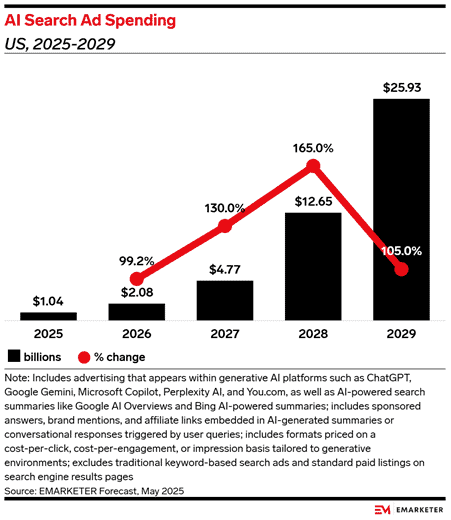
AI-powered search advertising is on the rise—and fast. What started as a niche experiment is quickly turning into a multi-billion dollar category. In 2025, AI search ads are expected to pull in just over $1 billion. By 2029, that number could hit nearly $26 billion, making up 13.6% of all search ad spending, compared to just 0.7% today.
That’s a massive jump in just four years. But while the growth is real, so are the challenges.
The Problem with Too Much Convenience
One reason AI search tools are catching on is simple: they’re efficient. Instead of offering a list of links, they give users direct answers. That’s great for people searching—but not so great for companies that rely on users clicking those links.
Big players like Google are stuck in a tricky spot. Their entire ad model is built around keyword searches and click-throughs. If users stop clicking, ad revenue drops. That’s why full-scale rollout of AI search isn’t happening overnight. The risk of cannibalizing their own revenue is still too high.
Who’s Leaning In—and Who’s Holding Back
Some industries are already moving full speed ahead with AI search ads. Sectors like:
- Finance
- Tech
- Telecom
- Healthcare
These fields benefit from AI’s ability to give high-value, accurate, and targeted answers—especially in situations where time and precision matter.
On the other hand, Retail is still treading carefully. Brands in this space rely heavily on product discovery through traditional search. With AI answers skipping over organic and paid results, the fear is that visibility (and sales) will drop. That uncertainty has slowed adoption for many.
Google Is Testing the Waters in Consumer Categories
Despite the cautious approach, Google is experimenting with AI search monetization. One early test? Food and beverage ads inside AI-generated overviews.
It might seem small, but it’s a clear sign that Google is trying to see how AI can work in more commercial areas like Consumer Packaged Goods (CPG). It’s a low-stakes way to gauge engagement before rolling it out further.
Déjà Vu: A Mobile Moment for AI Search?
This stage of AI adoption feels similar to where mobile ads were around 2010. Back then, mobile had:
- Low upfront costs
- No learning curve for users
- High engagement
- Better convenience
AI search shares many of those traits. But there’s one big difference: credibility concerns. While mobile just changed the screen size, AI changes how content is delivered. That raises new questions about trust, accuracy, and control.
What It Means for Marketers
AI search advertising is clearly growing, but it’s not just about jumping on the trend. The companies that succeed will be the ones that balance innovation with caution, especially if they already make big money from traditional search ads.
If you’re in marketing, this is your moment to rethink where and how your audience is searching. People want speed and relevance—and AI is delivering both.
But if your brand relies on visibility through search listings, you’ll need a new strategy fast. The old playbook isn’t going to hold up for long.