
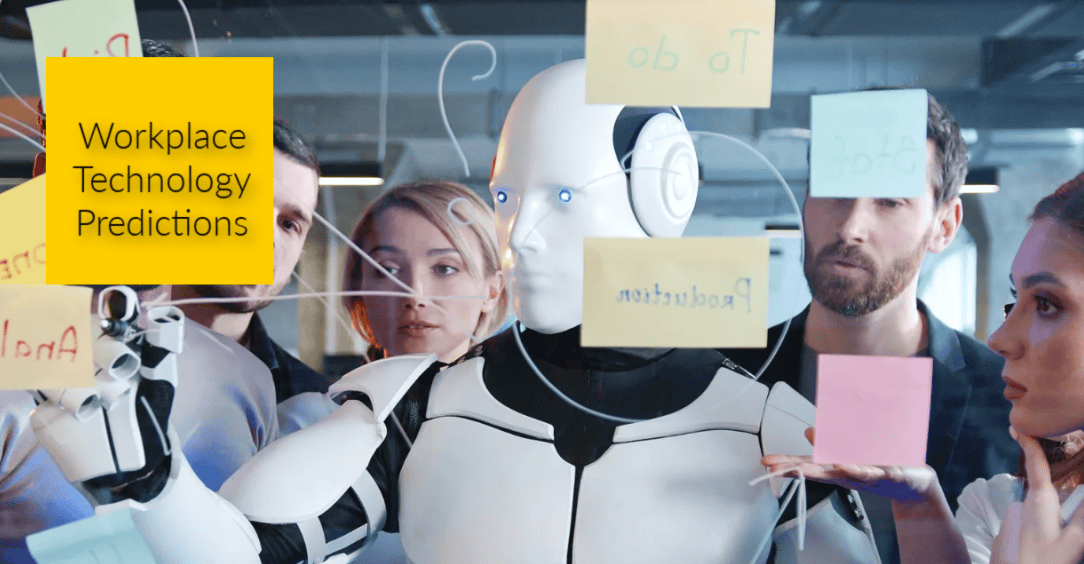
In 2025, UK workplaces will look very different from just a few years ago. Meetings will often take place in virtual spaces, not just in boardrooms. AI will handle routine tasks easily, and data will transfer between tools without the need for time-consuming copying and pasting.
Technology has changed from being a helpful tool to the main framework that connects all parts of the workflow. The pace of change shows that companies must adapt quickly; they can’t just watch from the sidelines anymore.
Currently, 39% of companies in the UK are using some form of AI, and an additional 31% are thinking about using it. This shows that reliance on technology is increasing. It suggests that by 2025, work environments will be more connected and automated than ever before.
The question is no longer if new workplace technology will come, but how fast teams will learn to use it. This is where the next generation of tools will make a difference.
AI Assistants That Work Like Real Colleagues
The iconic humanoid robot has stationed itself in the office premises from long ages, but the form of presence it would have exerted by 2025 would be more advanced. Gone are the simple chatbots that could only provide answers to specified questions. Today’s AI assistants can summarise meetings, prepare elaborate reports, and provide strategic insight through trend analysis of historical data and present trends.
According to a recent report from PwC, 44% of UK business operators are using AI to increase productivity and many businesses expect that number to grow significantly in the next two years.
For example, some marketing agencies now use AI to instantly track the performance of their campaigns, allowing their teams to spend time coming up with new creative ideas rather than spending time on data analysis.
Integrated Tech Ecosystems for Frictionless Workflows
One of the biggest shifts in workplace technology will be the move toward integrated ecosystems, where communication, project management, and even analytics tools talk to each other without constant manual work.
“The goal is for the tech to disappear into the workflow,” said Bridgehampton, a workplace technology partner that helps organisations integrate and optimise their tools behind the scenes. “Teams should only notice the outcomes: faster delivery, fewer bottlenecks, and more time for meaningful work.”
These systems reduce manual work, lower the chance of errors, and help teams quickly use accurate data. For businesses in the UK, this could mean meeting deadlines more reliably and improving customer satisfaction.
Immersive Collaboration Through AR and VR
Hybrid work is here to stay, and it doesn’t mean that teamwork has to suffer. Augmented reality (AR) and virtual reality (VR) are creating new ways for teams to connect, share ideas, and solve problems together.
Imagine exploring a 3D model of a new store design with your coworkers, even though you’re in different places. Or hosting a product demos in a fully immersive setting where clients can interact with features directly.
Surprisingly, a recent report from Accenture found that 1 in 6 (42%) of workers in the UK believe that immersive technology can solidify their connections with colleagues while working remotely.
Such technologies can help companies in saving time on project delivery by minimising the need to meet in person.
Hybrid Work Tools and Their Evolution
Hybrid working is now a common practice and not just a trend. Most organisations in the UK are shifting to flexible working environments, thereby requiring tools that would assist in-house and remote offices. We should build systems that are optimal for everyone working at one location or at any location. Cloud applications, collaboration platforms, and hybrid meeting solutions have also grown up in addressing the need.
Businesses in the UK now invest in unified communication platforms. These platforms make it easy to have video calls, share documents, and work together in real time, no matter where everyone is located.
Cybersecurity and Privacy as Core Features
With increasing advancement in workplaces towards digitisation, security has to be optimised. Not an afterthought, security should be included in workplace tools from the very beginning. Strong protections should therefore be implemented through biometric authentication and encryption and go with zero-trust security frameworks, that is every user and device needs to be verified.
In 2025, 43% of UK businesses reported experiencing a cybersecurity incident or attack within the year, emphasising the need for strong protection. Businesses should embed strong protection into their applications from day one, including biometric authentication, encryption, and zero-trust security frameworks.
Establishing rules such as the UK GDPR, which sets up stringent data management standards for UK businesses, requires that further toolbox developments are designed with enthusiasm to accommodate such regulations rather than rebuilding the already established toolbox.
The technology at the workplace used to be a set of tools; but now, it is a connected environment to help teams do their best work. AI will continue to expand its influence, teamwork will enhance remote work experiences, and security will be included at every level.
UK organisations have to change and lead. Those making intelligent investments will be in the future lineup, with processes that feel seamless. It’s not about what technology will do in the future, but how easily it will fit into our lives.