

If you want your law firm’s website to function as a conversion engine rather than a digital brochure collecting dust, these 15 essential website features will help you attract clients, improve search rankings, and turn your visitors into consultations.
Keep reading to learn more.
- Mobile-First, Responsive Design
Did you know that Google ranks sites based on mobile versions first? Because it does, meaning that non-responsive law firm websites drop in search results, frustrate visitors, and hike your bounce rate.
To see more traffic and longer sessions on all devices, make sure your site uses flexible grids, fluid layouts, and adaptive images.
And don’t forget to test it on the most popular browsers, phones, and tablets before you launch!
- Fast Page Loading Speed
If your website’s landing page takes 3 seconds to load, you’re driving 53% of your visitors away, and that’s a fact.
Not only does slow speed scream unprofessional, but Google ranks fast sites higher and lets search engines crawl them more efficiently. Tests even show that shaving 0.1 seconds can boost conversions by a whopping 8%.
The essentials: Make sure to compress your images, clean up any unnecessary code, and choose a reliable hosting provider.
- Clear and Compelling Calls to Action (CTAs)
Your law firm website can have the best content, but without strong calls to action (CTAs), your visitors will slip away.
CTAs direct people to schedule consultations, call, or submit forms, so make sure to place yours above the fold or in sticky headers to see higher engagement and faster conversions.
Expert tip: Ditch generic “Contact Us” buttons. Use phrases that trigger action: “Call Now for Legal Help” or “Schedule Your Free Consultation.” (The free consultation one never fails!).
- Comprehensive Attorney Bios
Now we’re getting into the industry specifics: Attorney bios are real trust builders when done right (not just an ego boost). These pages are often in the top three most visited on law firm websites and can drive up to 80% of search traffic.
And you know why?
Because visitors are scanning for credentials, experience, and practice focus before deciding to reach out.
So, in your law firm website design, make sure to showcase exactly that: professional headshots, education, courtroom wins, and community involvement.
Basically, treat each bio like a mini conversion page, with personal touches sprinkled in to make your attorneys feel human—and approachable.
- SSL Certificate and HTTPS Security
Every law firm website must possess an SSL certificate that encrypts data between users and your site, protecting sensitive info like contact details, case files, or payments.
Not only are encrypted sites 32% more likely to rank above unsecured ones, but also reports show that 84% of people will abandon interactions if data isn’t secure. Yup.
- Local SEO and Google Business Profile
Think about it: Most clients search locally. They type “attorney near me” or include a city name.
That means that appearing in local search results, Google Maps, and the local pack captures ready-to-hire prospects.
So, claim and fully optimize your profile with accurate NAP info, photos, hours, and reviews. Oh, and create location-specific landing pages, because local SEO is where visibility turns into real clients.
- Client Testimonials and Reviews
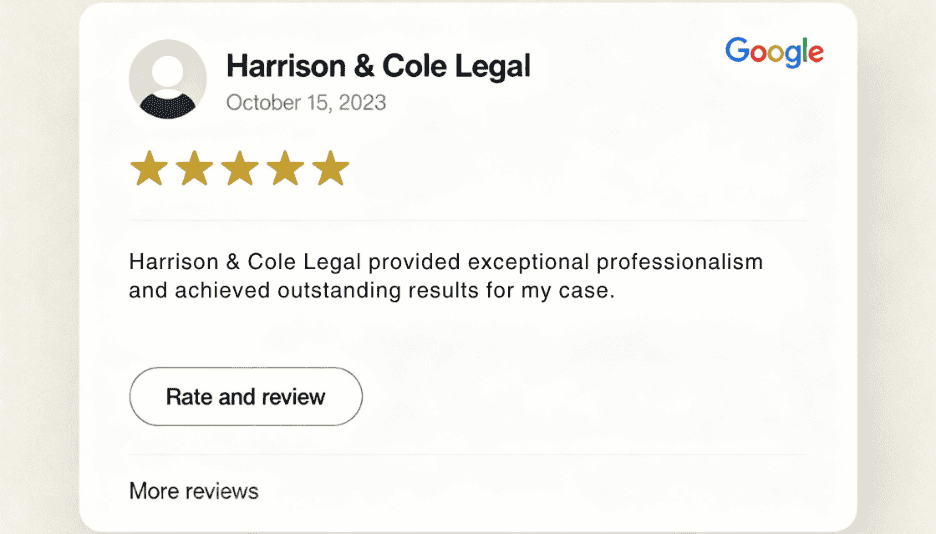
People trust the experience of others, especially when the stakes are high.
Studies show that 95% of potential clients read reviews before deciding, and many treat them like personal recommendations.
So, make sure your homepage, practice pages, and attorney bios include testimonials. And whenever you can, add the client’s name or photo to make it feel genuine.
- Dedicated Practice Area Landing Pages
Every practice area deserves its own landing page. These pages should:
- Answer specific client questions
- Show your expertise
- Aim to attract targeted traffic ready to convert
Not to mention, service-specific pages rank better because they match search intent and provide multiple ways for clients to discover your firm.
- Trust Signals
Visitors decide fast whether a law firm is credible—and what helps them make that decision is information about bar memberships, legal certifications, awards, and media mentions.
Beyond trust, these elements help SEO by signaling authority to Google.
- Secure Client Portal
Clients expect safe, efficient communication—all things a secure client portal offering encrypted messaging, document sharing, e-signatures, and case tracking offers.
Add one to your website to reassure clients that their sensitive information is protected and make it easy for them to stay updated on their cases. This sort of stuff builds trust before they even walk through your door.
- Video Content
This one’s a bit out of the box for many lawyers, but video content is the most engaging way to connect with clients nowadays, and your law firm websites can use it to stand out.
If you do, use it to humanize your attorneys, explain complex legal concepts, and build trust before prospects ever call.
- FAQ Section
FAQs save time, period. They give potential clients immediate answers, all while reducing routine inquiries for your staff, which is a win-win for everyone involved.
Plus, they help your site rank for question-based searches and featured snippets.
- Intuitive Navigation and Site Structure
If visitors can’t find what they need fast on your law firm’s website, they leave—it’s as simple as that.
To reduce friction, organize your top-level menus around Home, About, Practice Areas, Attorneys, Resources, and Contact.
Also:
- Keep dropdowns to two levels max,
- Use client-friendly labels, not legal jargon, and
- Keep CTAs and contact info in sticky headers visible on scroll.
Simplicity equals conversions.
- Content Marketing and Blog
Content that educates converts. And yes, even in this era of AI-driven searches.
SEO-driven blogs are still doubling average conversion rates, so focus on publishing articles regularly; answer client questions, share legal updates, and highlight your expertise.
- Accessibility
Accessible, ADA-compliant law websites are both legally and ethically necessary for people with vision, hearing, mobility, and cognitive impairments.
That means paying attention to alt text, structured content, high-contrast colors, and keyboard navigation, so your site is genuinely usable and helpful for everyone.