
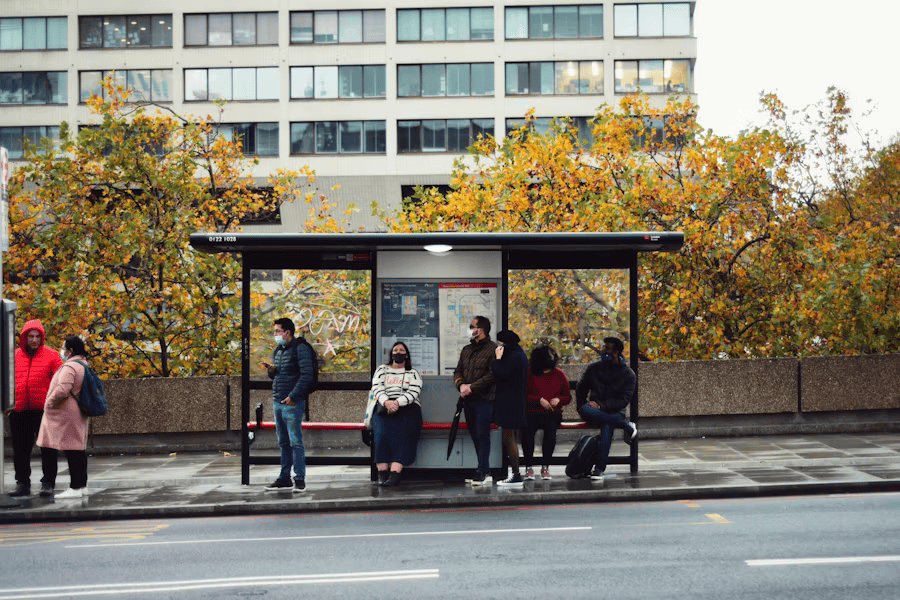
There is a strange kind of stillness that lives in the daily commute. Not peace, exactly. More like a pause that nobody asked for. A platform at 7:42 am. A traffic light that never seems to change. A bus stop where people stare at their phones like they are trying to disappear into them. This is not leisure time. It is borrowed time. And that is precisely why it matters.
Via Unsplash
Because while people cannot skip the commute, they do notice what meets them there. Brand awareness does not always happen in glossy moments. Sometimes it happens while someone is standing with a coffee that is cooling too fast, waiting for something that is running late again.
The Commute Is One Of The Last Unfiltered Attention Spaces
Most advertising competes with noise. Tabs, notifications, endless scroll. Everyone is half-listening, half-skipping.Commute spaces work differently. When you are waiting for a train, you are not in a feed. You are in the physical world. Your eyes wander. You read what is around you. You register things without trying.
That is why outdoor ad placements still have weight. A poster near a bus stop is not asking for clicks. It is simply present. Repeated. Familiar.
Think of the way you remember certain brands not because you searched for them, but because you saw them every morning for three weeks on the same route. That repetition builds something quiet: recognition.
“Wait Time” Is Emotional Time, And Brands Can Meet People There
Nobody loves waiting. Even calm people feel a slight edge when time is being taken from them.
The best commute advertising understands that mood. A bland message feels invisible. A message that gets the moment feels human. A skincare brand showing a simple line like: Long week? Your skin feels it too. A meal subscription service is placing an ad near office commuter lines that says: Dinner does not have to be another decision.
These are not grand statements. They are small acknowledgements. They land because they understand the emotional texture of waiting. The commute is where people are tired, distracted, hopeful, stressed, and half-awake. If a brand speaks with empathy instead of noise, it earns attention instead of demanding it.
Context Makes Outdoor Advertising Sharper Than Digital Ever Can
Digital ads follow people. Outdoor ads meet them. That difference matters. A gym promotion placed outside a residential station makes sense at 6 pm when people are heading home, thinking about routines. A university campaign near a student-heavy bus corridor hits differently than the same creative dropped randomly online.
The environment does half the storytelling. A coffee brand beside a cold platform in winter. A travel company near an airport shuttle stop. A local dentist ad near a school pickup zone.
The commute is full of micro-contexts. Brands that pay attention to those details feel less like advertisers and more like neighbours.
The Best Commute Campaigns Are Built For Glances, Not Gazes
People do not study posters. They absorb them. If someone has three seconds before their train arrives, you cannot ask them to decode a paragraph.
A strong example: Spotify’s localised billboard humour. They rarely explain the product. They simply mirror behaviour. That is why people remember them. Commute advertising works best when it is instantly legible but emotionally sticky. Not clever for clever’s sake. Clear, sharp, human.
Small Brands Can Win Here Too, Not Just The Giants
There is a myth that outdoor advertising belongs only to massive budgets. Not true. A local bakery can dominate a neighbourhood route with one smart placement. A regional law firm can become familiar simply by being present where people pass every day.
The power is not always scalable. It is consistency. One well-placed panel near a commuter bottleneck can outperform a scattered digital spend because it becomes part of someone’s routine.
That is why formats like a Bus Shelter placement are so effective when used thoughtfully: people stand there, often daily, often bored, often looking up.
Commuters Trust What Feels Stable, And Outdoor Spaces Build That Stability.
Digital advertising can feel slippery. Here one second, gone the next. Outdoor ads feel anchored. A brand that invests in physical space signals something subtle: permanence. It says, We are real. We are here. We are not just an algorithm chasing you.
That psychological effect matters more than marketers sometimes admit. It is why banks, universities, hospitals, and infrastructure brands still use outdoor ads heavily. They are selling trust as much as services. A commuter might not act immediately, but familiarity grows quietly. And familiarity is often the first step toward choice.
The Commute Is A Story Loop, And Brands Can Become Part Of It.
People do not commute once. They commute in cycles. Monday morning. Tuesday evening. Same corner. Same delay. Same platform announcement.
That repetition is marketing gold, but only if the creative respects the rhythm. A campaign can unfold in parts:
- Week one: introduce the brand.
- Week two: reinforce the message.
- Week three: add a small call to action.
Or even something as simple as rotating copy that feels seasonal, local, alive.
The brands that win are the ones that understand commuters are not an audience. They are people moving through a repeated life pattern.
Measurement Matters, But Not Everything Meaningful Is Instantly Measurable.
Marketers love attribution. Outdoor ads resist neat tracking. But that does not make it ineffective. It makes it different.
You measure commute awareness through uplift: branded search increases, direct traffic rises, store visits grow, sales conversations start with “I’ve seen you around.” Not every marketing effect comes with a perfect dashboard screenshot.
Sometimes, brand awareness is simply someone recognising your name when it matters. That is not vague. That is real.

Via Unsplash
A Final Thought: Waiting Is Not Wasted Time; It Is Human Time
The commute is full of quiet moments people never planned for. A pause before work. A breath between obligations. A tired glance out of a window. A small pocket of life happening in transit.
Brands that treat these moments with care, not noise, can build something rare: familiarity without intrusion. Because the best brand awareness does not interrupt. It accompanies.
And the next time someone is standing still, waiting for the world to move again, they might notice you. Not as an ad. As something known.