
When small businesses call us, they usually ask for “a video”. They mean one finished film, a minute or two long, that goes on the homepage and gets posted once on social media. That’s a reasonable thing to want. But it’s rarely the best use of a day’s filming.
We run a video, photography and drone team in Suffolk and Essex. The most useful thing we’ve learned is that a single well-planned shoot can supply weeks of content: posts, adverts, website clips, recruitment material and even screens in a shop. The difference isn’t the budget. It’s the planning before anyone picks up a camera.
Why it’s worth getting right
Your customers are already watching video. Ofcom’s Online Nation 2025 report found YouTube reaches 94% of UK online adults every month. The money has followed: IAB UK estimates that UK businesses spent £9.3bn on video advertising in 2025, up 20% on the year before and 23% of all digital ad spend.
For a small business, those figures don’t mean you need to match a national brand. They mean the people you want to reach expect to find you in video. They also mean one lonely video on your homepage is competing with a lot of noise.
Plan the shoot around the uses, not the film
The first question we ask isn’t “what should the video say?” It’s “where will people see it?” Write a list before you book anything:
- your website: homepage, service pages, about page
- social media: Instagram and TikTok (vertical), LinkedIn and Facebook
- paid adverts, which need short versions that work in the first few seconds
- recruitment and staff onboarding
- email newsletters
- screens: reception, a shop counter, an exhibition stand
Each of those needs something slightly different, and almost all of it can be captured on the same day if you plan for it. That means filming key moments both wide and vertical, getting clean shots with nobody talking that an editor can cut into anything, asking interview questions that produce short answers worth quoting, and taking photographs at the same time as the video.
If you only brief a videographer on “the film”, you’ll get the film. If you brief them on the list, you’ll get a library.
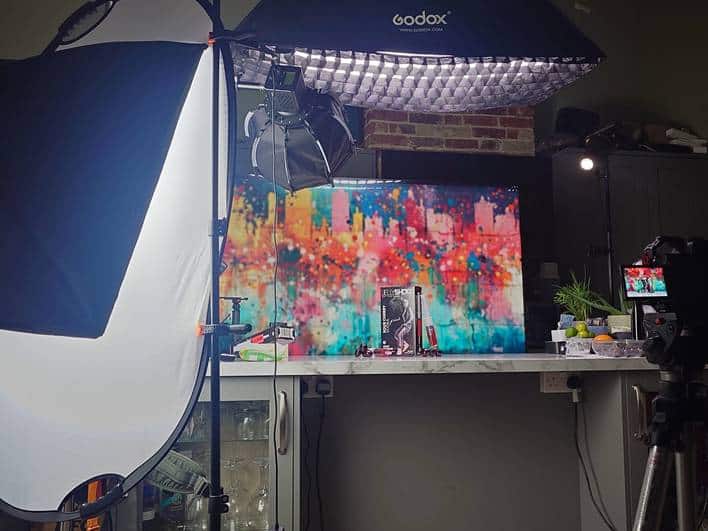
Behind the scenes on a Jellyshotz product set, with lighting, a screen backdrop and the camera on a tripod.
What to film on the day
For most small businesses, a productive day covers five things:
- One or two interviews. A happy customer is the most persuasive voice you have, and a member of staff who loves the job comes second. Keep the questions simple: what was the problem, why did you choose us, what changed?
- The work itself. The product being made, the service being delivered, hands doing the job. This is the footage you’ll use most.
- The people. Your team, behind the scenes and in the moment. People buy from people, especially from small firms.
- The place. An establishing shot of your premises or location. A drone shot often earns its place here, if the site and the rules allow it.
- Stills. Photos from the same day keep your website, press releases and social posts consistent with the video.
Events are a good shortcut. When we filmed the showroom opening for Kesseler Kitchens in Witham, the day already had a structure: a mayoral ribbon cutting, speeches, live kitchen demonstrations and guests. Two videographers covered it, with drone footage showing the showroom in the town centre. One event gave the business a launch film and footage for future promotion. Events also work inward. For an Ipswich cleaning company’s staff summer party, about two hours of filming and photography produced 300 edited photos and a short montage film the team could share internally, on social media and as part of their employer brand.

Staff at Platinum Cleaning’s summer party in Ipswich, from about two hours of combined photo and video coverage.
A real example: one brand, many outputs
The clearest example from our own work is Jellyshotz, a jelly-shot brand we worked with for more than a year. It didn’t start as a grand content plan. It started with product photos. Because every shoot was planned with several uses in mind, the same work ended up in a lot of places:
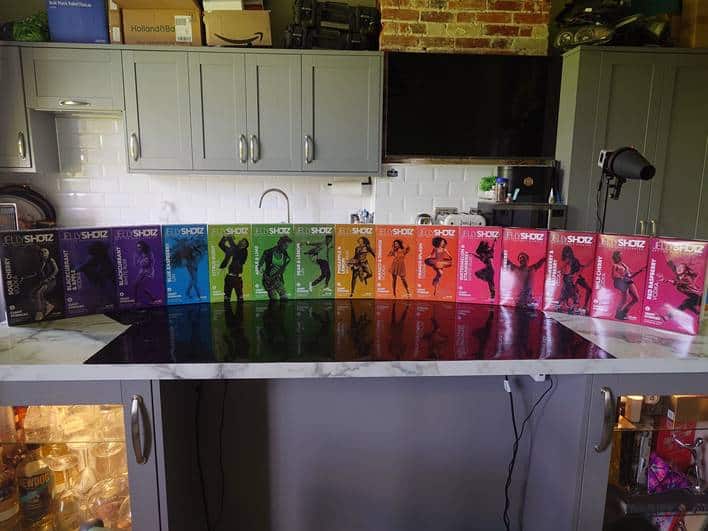
Jellyshotz packs lined up for a product shoot. The same session supplied shop photos, social clips and display-screen content.
- product photography for their online shop and Amazon listings, including cut-out images their designers could reuse
- short vertical flavour films for social media
- festival coverage, with highlight edits and Instagram stories
- a 60-minute looping film for the display screens on their shopping-centre units
The lesson was that the expensive part of video is setting up: the lighting, the crew, the travel. Once that’s done, an extra vertical version or ten minutes of product close-ups costs very little. The businesses that get the most from video are the ones that ask for those extras on the day, not afterwards.
Make it last
The edit is where one shoot turns into weeks of content. Ask for:
- cut-downs: 15, 30 and 60-second versions of the main film
- captions burned in, because a lot of social video is watched with the sound off
- versions for each platform: vertical for Reels, TikTok and Stories, square or landscape elsewhere
- single clips of interview answers, each one a post on its own
Then make a simple plan. Even one piece a week, mixing clips, photos and the main film, will keep a small business visible for two or three months from a single day’s filming.
If you take one thing from this, make it the list. Before you speak to anyone about video production in Suffolk, Essex or wherever you are, write down every place your video could appear. It costs nothing, and it changes what you get for your money.
—
Sam Charlesworth runs The Camera Guys, a video production, photography and drone team based in Sudbury, Suffolk and Colchester, Essex, filming for businesses across East Anglia and London.